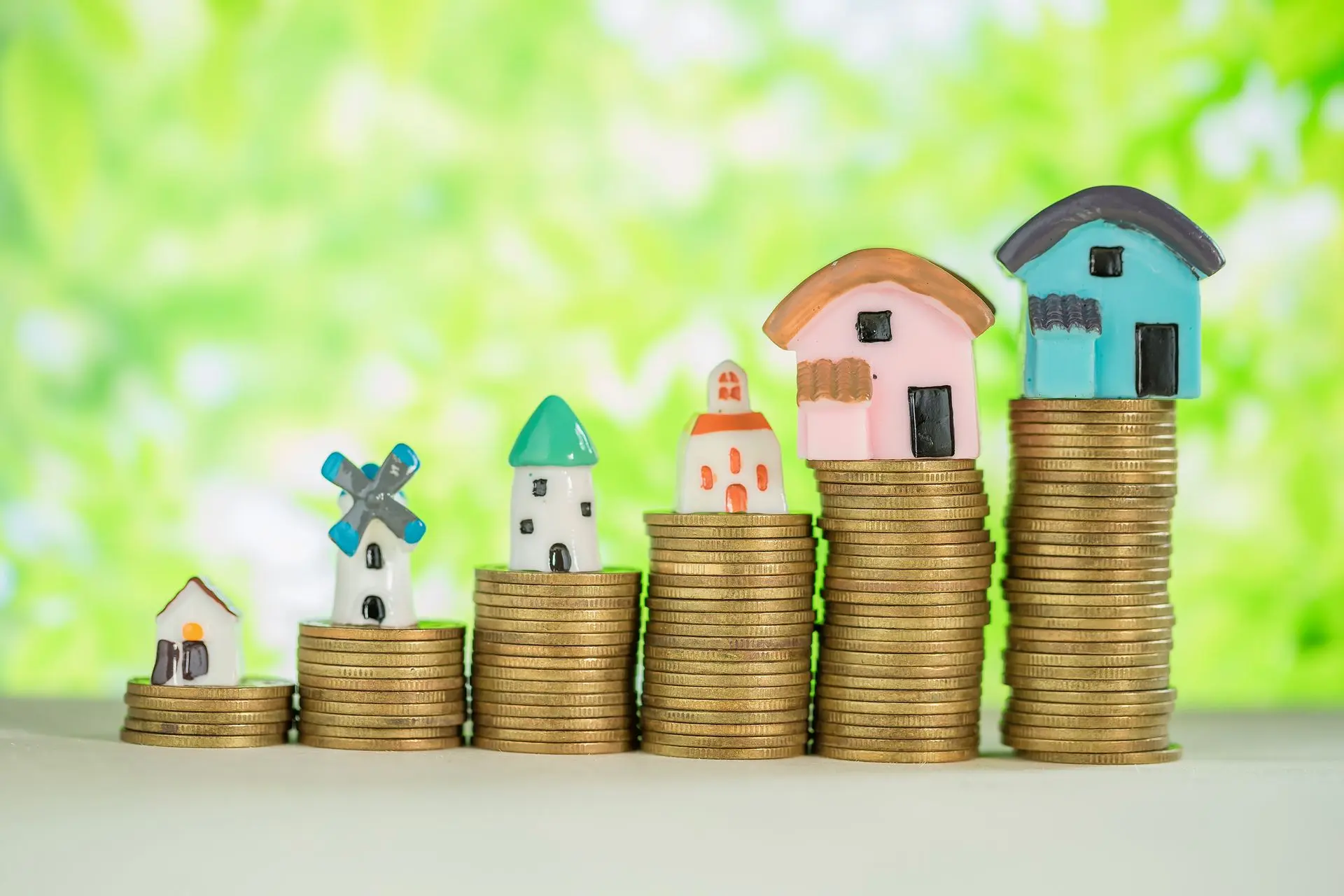
In Luxembourg, state aid for photovoltaic installations is causing a lot of talk... and a lot of doubt. We still often hear about “50% aid”, “€1,500 per kWp”, or different rules depending on whether you are an individual or a company. In reality, since 2026, the system still exists, but its logic has changed. And it is above all this transition which is creating confusion today.
For several years, Luxembourg offered one of the most generous schemes in Europe. In many cases, the aid could cover almost half the cost of the installation, making photovoltaics immediately profitable, even without much self-consumption. This exceptional regime gradually came to an end. From 2026, the State has chosen a more stable, more predictable, but also more supervised system. The aid has not disappeared, it is simply calculated differently.
Today, whether you are an individual, a company or even an industrial company, photovoltaic aid goes through the Klimabonus and is based on an official formula. This formula takes into account the installed power and applies a degression as the installation grows. Concretely, the more panels we install, the more the aid per kWp decreases. It's voluntary. The objective is no longer to subsidize ever-larger installations, but to encourage well-sized projects in relation to actual consumption.
In practice, this means that an installation of around 10 to 15 kWp makes it possible to reach the maximum aid, which is currently around 10,000 euros. Installing more panels is obviously still possible, but this does not entitle you to a higher premium. This is often where the misunderstanding arises: some people think that it is “forbidden” to install more than 15 kWp, when this is not the case. There is no technical limit imposed by the aid, only a financial ceiling.
This reasoning also applies to businesses, including industrial activities. Yes, a company can benefit from the photovoltaic Klimabonus. But no, a 100 kWp installation will not receive ten times more aid than a residential installation. Here too, the ceiling is around 10,000 euros. From this level, the profitability of the project is mainly based on self-consumption and the company's energy strategy, not on the subsidy.
It is precisely in this new context that batteries take on their full meaning. When the purchase price of the electricity injected is low – which is often the case, because everyone produces at the same time – storing your energy to consume it later becomes much more interesting than reselling it. A correctly sized battery can significantly increase the self-consumption rate, reduce dependence on the network and give real value to each kilowatt hour produced. But again, the key word is balance. A battery that is too small is useless, a battery that is too large will never pay off.
What the State encourages today is therefore no longer the “maximum number of panels”, but the right project in the right place, with the right size and the right use. This is also why pre-financing still exists in certain cases, but under specific conditions. It is no longer an automation, but a targeted tool. https://guichet.public.lu/fr/citoyens/outils/simulateur-photovoltaique.html
In summary, photovoltaics in Luxembourg remain an excellent solution, provided they are well understood. The help is still there, but they no longer carry out the project alone. It is consumption, self-consumption and, increasingly, storage that make the difference. It is exactly on these points that we support our customers: explaining, costing, sizing correctly, and above all avoiding disappointment after installation.
If you have a photovoltaic project or if you are trying to understand whether a battery makes sense in your situation, the best approach remains simple: start from your reality, not from a generic promise. This is how solar becomes truly profitable and sustainable.